



Air Handling (AHU): What It Is and How It Works
In this article, we explain what an AHU is, how it works, the difference between an FAHU and an AHU, and the signs that it’s time to replace the equipment.
What is an AHU?
An AHU (air handling unit) is the central equipment that draws in outdoor air, removes pollutants, adjusts temperature and humidity, and distributes the treated air throughout indoor spaces.
This is exactly what distinguishes an AHU from simpler solutions, making it suitable for projects with higher technical requirements.
The difference is clear: while an air conditioning system recirculates existing air, an AHU continuously introduces fresh outdoor air, properly filtered and treated to meet strict quality, temperature, and humidity parameters.
What Are the Main Components of an AHU?
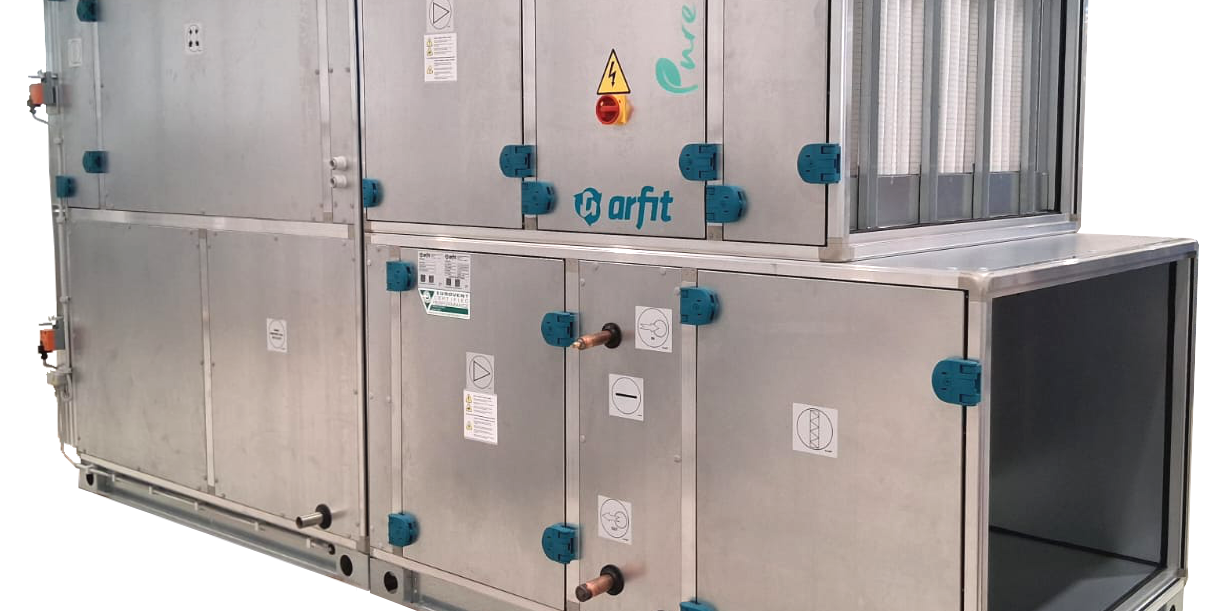
The configuration of an air handling unit is not fixed; it is tailored to each project’s requirements. This flexibility makes the AHU a highly versatile solution, allowing for the integration of only the components necessary to ensure efficient air treatment and distribution.
The most common components are:
- Air mixing section: combines fresh and recirculated air
- Filtration section: removes particles and contaminants
- Heat exchangers: heat or cool the air
- Humidity control systems (when applicable)
- Heat recovery unit: recovers energy from the extracted air
- Fans: move the air at variable speeds
- Electrical and control system.
In addition to these elements, the unit’s construction is critical to overall performance. In this context, standards such as EN 1886 define classification criteria related to mechanical strength, air leakage, thermal bridges, and enclosure insulation.
How Does an AHU Work?
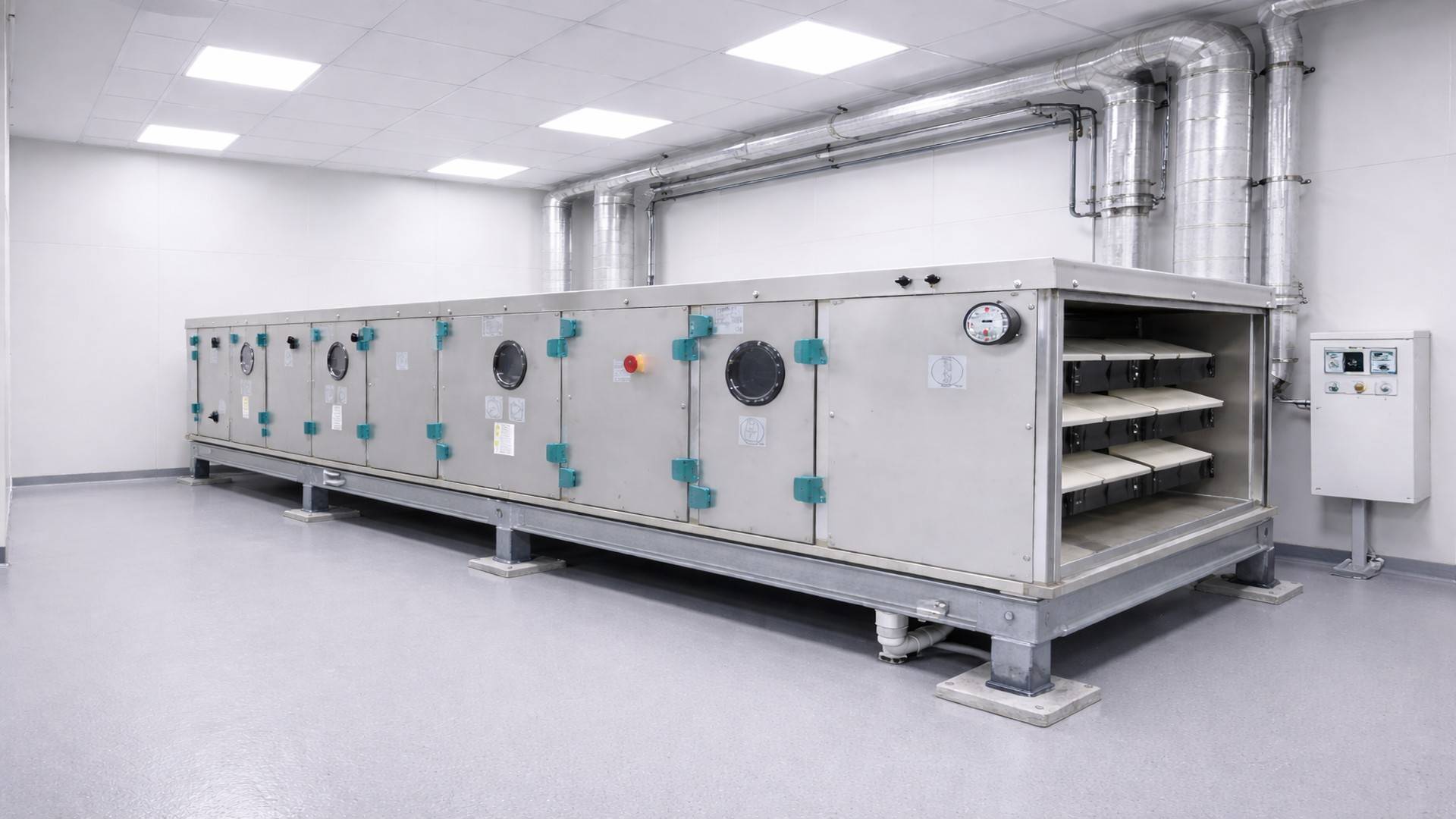
The operation of an air handling unit involves a sequence of processes that capture, treat, and distribute air in accordance with defined requirements
Simply put, the process can be broken down into the following steps:
1. Air Intake and Renewal
AHUs can operate using outdoor air, recirculated air, or a controlled mix of both, tailored to the space’s needs. This is managed through systems that automatically adjust the amount of fresh air based on the space’s occupancy. CO₂ sensors help determine when ventilation needs to be increased or decreased, ensuring good air quality at all times while minimizing energy consumption.
Under favorable conditions, free cooling can be used to cool the interior space with outdoor air. This mode reduces the need for mechanical cooling, thereby enhancing the system’s overall energy efficiency.
2. Filtration
After being drawn in, the air passes through a series of filters designed to remove particles and contaminants, ensuring the quality of the supplied air.
Depending on the use of the space and the hygiene and air quality requirements, the following may be used:
- Pre-filters for capturing larger particles.
- Filters compliant with the European standard EN ISO 16890, which evaluates the efficiency in capturing fine airborne particles (such as ePM2.5 or ePM1);
- HEPA (High Efficiency Particulate Air) absolute filters, capable of retaining microscopic particles with high efficiency and, therefore, essential in hospital, laboratory, or industrial environments.
In addition to proper selection, periodic maintenance of the AHU filters is essential to ensure system performance. Replacing them prevents efficiency losses, increased energy consumption, and deterioration of air quality, and should be performed by specialized teams.
3. Thermal Treatment
AHUs incorporate heating and cooling coils that regulate the air temperature before it is distributed.
Depending on the building’s infrastructure and the heating solution adopted, the coils can be powered by:
- Hot water
- Steam
- Electric heating elements
- Chilled water from a chiller
- Direct expansion (DX) systems
This process adjusts the temperature of the fresh air before it is introduced into the space, ensuring it does not affect thermal comfort.
4. Humidity Control
In environments where relative humidity is a critical parameter, such as hospitals, museums, or the pharmaceutical industry, the AHU can incorporate:
- Humidification systems;
- Dehumidification systems;
- Automated humidity control strategies.
Humidity control is crucial for maintaining environmental stability, safeguarding sensitive equipment, and fulfilling the technical and regulatory requirements of each sector.
5. Heat Recovery
Heat recovery is increasingly common in modern AHUs, allowing the energy in extracted air to pre-treat fresh air and reduce energy consumption.
Among the most commonly used solutions are:
- Plate heat exchangers enable heat transfer between air streams without direct contact.
- Heat recovery wheels, which recover sensible energy, have efficiency levels ranging from 70% to 80%.
- Indirect recovery systems are used when physical mixing of air streams is not possible.
In more demanding applications, the performance of these systems is validated through independent certifications, such as those from Eurovent, which reinforces the equipment’s reliability.
6. Air Supply and Control
After treatment, the air is moved by EC (Electronically Commutated) fans and variable-frequency drives, which allow airflow to be adjusted to the space’s needs.
The air is then distributed through a properly sized duct network, ensuring a balance between the air entering and leaving the spaces.
Operation can be integrated into a Building Management System (BMS), enabling continuous monitoring, energy optimization, and performance adjustments based on the building’s operating conditions.
When Should an AHU Be Replaced?
Even when properly sized, an AHU is not a permanent piece of equipment. The decision to replace it should take into account various technical and operational factors, including:
- Loss of energy efficiency compared to newer solutions.
- Difficulty in obtaining replacement parts.
- Lack of compliance with current standards (e.g., filtration, efficiency, or insulation requirements according to EN 1886).
- Inability to meet new airflow or control requirements.
- Maintenance costs disproportionate to the value of the equipment.
In many cases, replacing or retrofitting the AHU improves indoor environmental conditions and reduces energy consumption.
What Is the Difference Between an AHU and an FAHU?
When evaluating air handling solutions, the following question often arises: What is the difference between an AHU and an FAHU? Although similar in function, they differ in how they operate and the level of air exchange required by the project.
- AHU (Air Handling Unit): can operate on a mixture of fresh air and recirculated air, reducing the energy required to treat outdoor air. It is the most common solution in locations where partial recirculation is acceptable, such as offices, hotels, and shopping centers.
- Fresh Air Handling Unit (FAHU): operates exclusively using outdoor air, with no recirculation. It is mandatory in spaces where cross-contamination poses a risk, particularly in sectors with strict hygiene and safety requirements.
A typical example is a hospital air-handling unit, where an FAHU system is often required, featuring multiple filtration levels and differential-pressure control to prevent cross-contamination between spaces.
This distinction directly affects system sizing, energy consumption, and control strategy.
The Right AHU Makes All the Difference
They influence not only indoor air quality but also the building’s operating costs throughout its lifespan.
At ARFIT, we handle each project on a tailored basis from design through installation and maintenance, ensuring the implemented solution meets the defined requirements.
Do you have questions about which solution is best suited for your project? Contact us.
Ready to start your HVAC project
Book a meeting with our team, no obligation!
Ready to start your HVAC project?
Related News
Arfit sponsors the 26th Heating, Ventilation, Air Conditioning and Refrigeration Conference
On 15 October 2026, Portugal’s National Laboratory for Civil Engineering (LNEC), in Lisbon, will host the 26th Heating,…
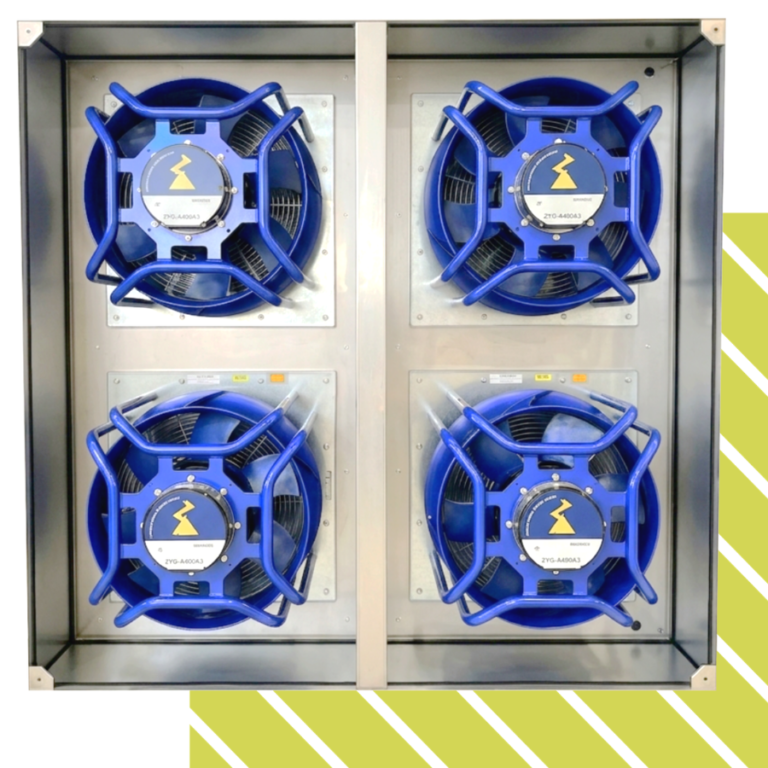
Wallfit – A Solution for More Efficient HVAC System Modernization
The need to improve energy efficiency and reduce the carbon footprint of buildings is driving new approaches to…
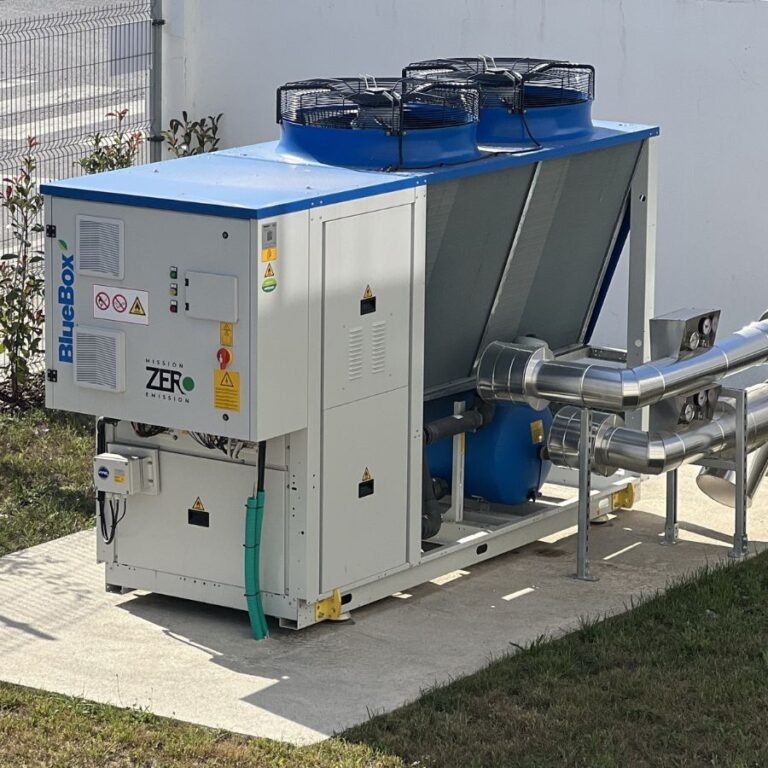
BlueBox’s ZETA ZERO HP provides cooling for ARFIT’s new facilities
The decarbonisation of buildings is no longer a trend; it has become a priority. Today, designing an HVAC…